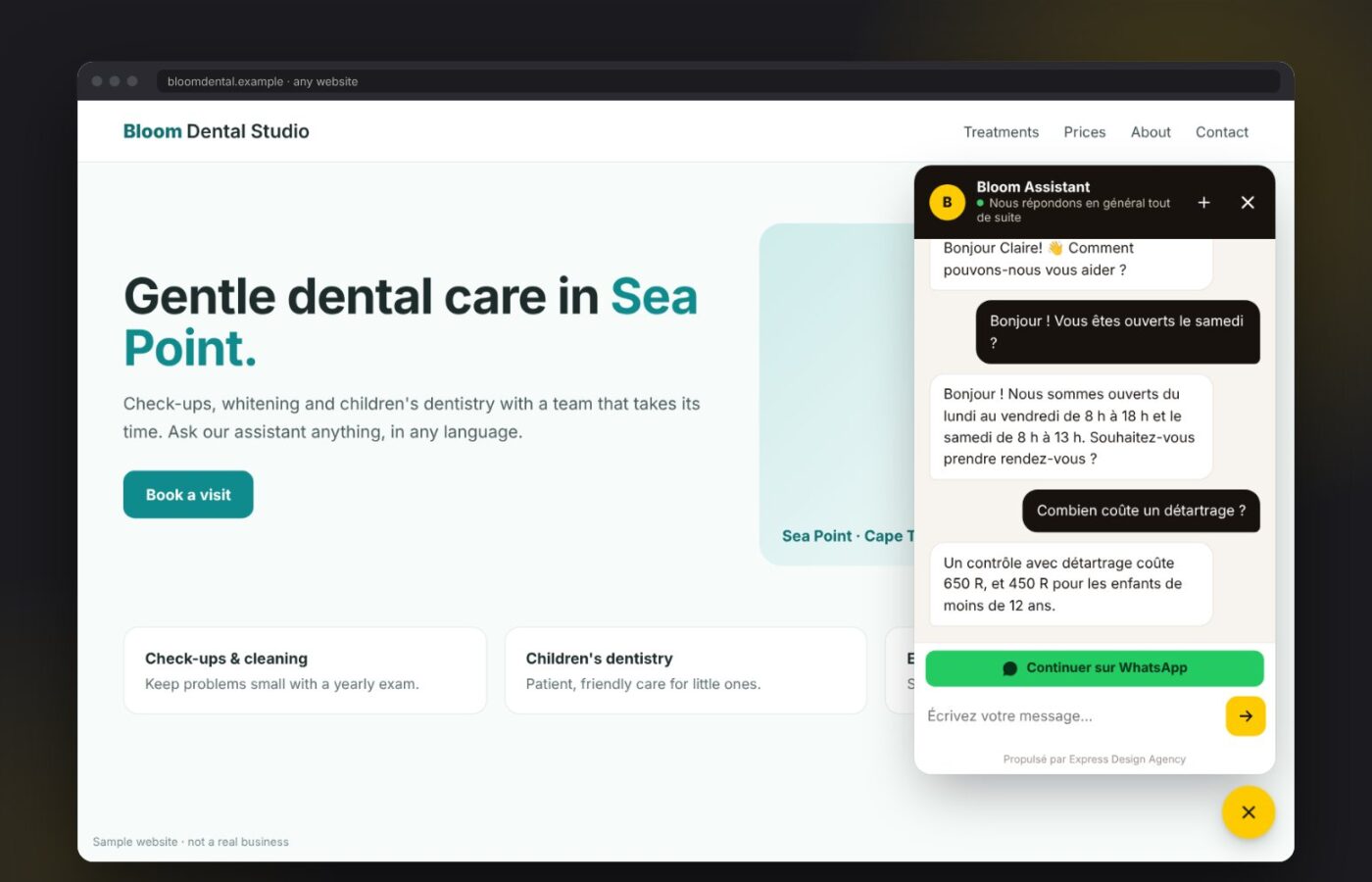
Walk down any street in Cape Town, Johannesburg, Kinshasa or Nairobi and you’ll hear three or four languages in a minute. Your website visitors are no different. Some write in English, but many would rather ask in French, Portuguese, Swahili, isiZulu or Afrikaans, and some simply leave when they can’t.
People buy from businesses that understand them
A question like “Are you open on Saturday?” is small, but the answer decides whether someone visits you or your competitor. When the reply comes in the visitor’s own language, it feels personal and trustworthy. When it doesn’t come at all, or comes the next morning in a language they struggle with, the moment is gone.
What “multilingual” should mean for a small business
- Reply in the language the visitor writes in. Not a flag menu they have to find, just an answer that matches them.
- Switch when they switch. Plenty of conversations start in English and move to French or isiZulu halfway through.
- Keep your facts the same in every language. Prices, hours and services shouldn’t change because the language did.
How to do it without hiring a translator
You don’t need to write your website five times. With the ED-ChatBot you write your answers once, in English or French. With AI switched on, the bot answers each visitor naturally in the language they write in, using only the facts you gave it. If it isn’t sure, it says so and hands the chat to your team.
Three quick steps for this week
- List the ten questions customers ask most, by phone, WhatsApp or in person.
- Write short, honest answers with your real prices and hours.
- Put them where your visitors are: on your website, answering at any hour.
Want to see it in action? Watch the 80-second demo or start a free trial.
2 comments